



Root canal treatment itself is the procedure and recovery is what happens next. Proper aftercare following root canal treatment helps your tooth recover comfortably while protecting it from further damage or infection.
For most people, recovery is relatively straightforward. Some tenderness when biting or chewing is normal during the first few days, especially if the tooth was badly inflamed or infected before treatment. What you do during this period matters. Eating the right foods, keeping the area clean and avoiding excessive pressure on the treated tooth can all make recovery easier.
If you have recently undergone root canal treatment in Malaysia, here is what you can expect during the days that follow. Still unsure whether your tooth needs treatment? Learn about the common signs you may need a root canal, including persistent toothache, sensitivity and swelling.
What Happens After a Root Canal Treatment?
After a root canal, it is normal for the treated tooth and the surrounding area to feel a little different for a few days. During the root canal treatment procedure, infected or inflamed tissue inside the tooth is removed and the root canals are cleaned and sealed. However, the tissues surrounding the root may still be irritated and need time to settle.
While the Local Anaesthetic Is Still Active
Your lip, cheek, tongue or jaw may remain numb for around 2 to 4 hours after treatment. During this time, avoid eating until normal sensation returns. It is surprisingly easy to bite your cheek or tongue without realising it. Hot drinks are also best avoided because numbness can make it difficult to judge the temperature properly.
Speaking and smiling may feel slightly awkward for a short while too. This is simply because the anaesthetic can temporarily affect the way the surrounding muscles feel and move. Your dentist may recommend pain relief depending on your treatment and medical history. Follow the instructions given by your dentist or pharmacist rather than waiting for the discomfort to become more noticeable.
Once the Anaesthetic Wears Off
As the numbness fades, the treated tooth and nearby gum may feel tender, especially when you bite or chew. Many patients describe it as a bruised feeling around the tooth rather than sharp pain. This happens because the tissues around the root may still be recovering from the inflammation or infection that was present before treatment.
For most people, the tenderness gradually improves over the next few days. Teeth that had a larger infection or more complicated root canals may take a little longer to settle. The important thing is that the discomfort should generally be moving in the right direction – becoming less noticeable rather than more painful.
Day by Day Recovery Timeline
Recovery after root canal treatment is slightly different for everyone. It can depend on how badly the tooth was infected, which tooth was treated and how much inflammation was present beforehand.
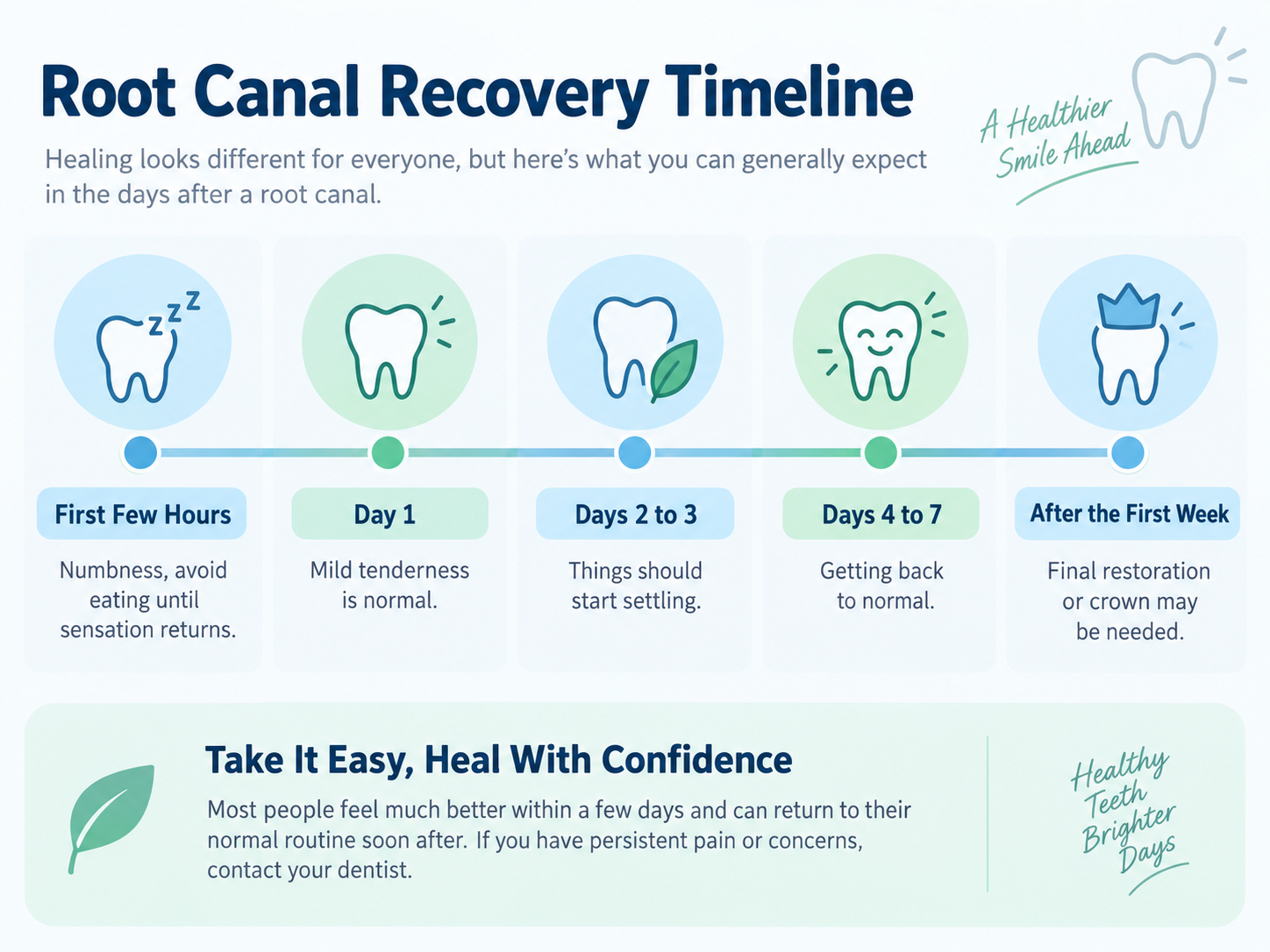
Here is a general guide to what you may experience during the first week.
First Few Hours After Root Canal Treatment
Your mouth may still feel numb for several hours after leaving the dental clinic. Avoid chewing until the anaesthetic has completely worn off. Once sensation returns, start with something soft and try to chew on the opposite side of your mouth. The treated tooth may feel slightly unfamiliar at first, especially if a temporary filling has been placed. Be gentle with it and avoid testing the tooth by biting down repeatedly.
Day 1: Some Tenderness Is Normal
By the end of the first day, you may notice mild tenderness around the treated tooth. It may feel more noticeable when chewing or bringing your teeth together. This is usually related to the tissues surrounding the root rather than the inside of the tooth itself.
Choose softer foods for the rest of the day and avoid putting unnecessary pressure on the treated side. If your dentist has prescribed or recommended medication, take it according to the instructions provided.
Days 2 to 3: Things Should Start Settling
During the next couple of days, the tooth should gradually feel more comfortable. You may still notice some tenderness when chewing, especially if the tooth was badly infected before the root canal. Continue avoiding particularly hard, crunchy or sticky foods on the treated side.
The key thing to watch is the overall trend. Mild soreness that is slowly improving is usually expected. Pain that becomes stronger, or new swelling that begins to develop, should be checked by your dentist.
Days 4 to 7: Getting Back to Normal
By this stage, many patients barely notice the treated tooth during normal daily activities. You may still feel mild tenderness when biting something firm, but significant or worsening pain would be unusual.
Continue to be careful if the tooth still has a temporary filling. A tooth that has undergone root canal treatment may already have lost a considerable amount of natural structure because of decay, cracks or previous fillings, which can make it more vulnerable to fracture.
After the First Week
After the first week, the tooth should generally continue to feel more natural and comfortable. However, finishing the root canal does not always mean the tooth is completely restored.
Depending on how much tooth structure remains and where the tooth is located, your dentist may recommend a permanent filling or dental crown to strengthen and protect it. This is particularly important for premolars and molars because they handle greater chewing forces.
Even when the tooth feels completely fine, do not delay the final restoration recommended by your dentist. Protecting the tooth after treatment is an important part of keeping it functional in the long term.
If you are still considering treatment, learn more about root canal treatment in Kota Kinabalu, including when it may be recommended and what to expect during your appointment.
What to Eat After Root Canal Treatment?
You do not need to survive on porridge for a week after root canal treatment. The main goal is simply to avoid putting unnecessary pressure on the treated tooth while it is still tender or temporarily restored.
Food / drink | ✓ Safe to eat | ✕ Avoid |
Temperature | Cool and room temperature | Very hot food and drinks until anaesthetic wears off |
Texture | Soft: yogurt, eggs, soup, mashed potato, soft fish | Hard, crunchy, chewy: nuts, crackers, tough meat |
Consistency | Smooth: smoothies, porridge, tofu, avocado | Sticky: chewing gum, caramel, dried fruit |
Drinks | Water, cool herbal tea, diluted juice | Alcohol (interacts with medication), very hot tea or coffee |
Side of mouth | Untreated side — for all meals during first 3–4 days | Treated side — until soreness fully resolves |
Soft food does not need to be restricted to the first 24 hours only. Keep eating gently for the duration of the recovery period roughly 3 to 5 days and continue avoiding the treated side for as long as the tooth feels sensitive when you chew on it.
One specific caution: sticky foods such as chewing gum, caramel, and chewy sweets can dislodge a temporary filling. A dislodged temporary filling exposes the root canals to saliva and bacteria, which can recontaminate the cleaned canals and compromise the treatment outcome. If your temporary filling comes out, contact your clinic as soon as possible, do not wait for your scheduled appointment.
Oral Hygiene After Root Canal Treatment
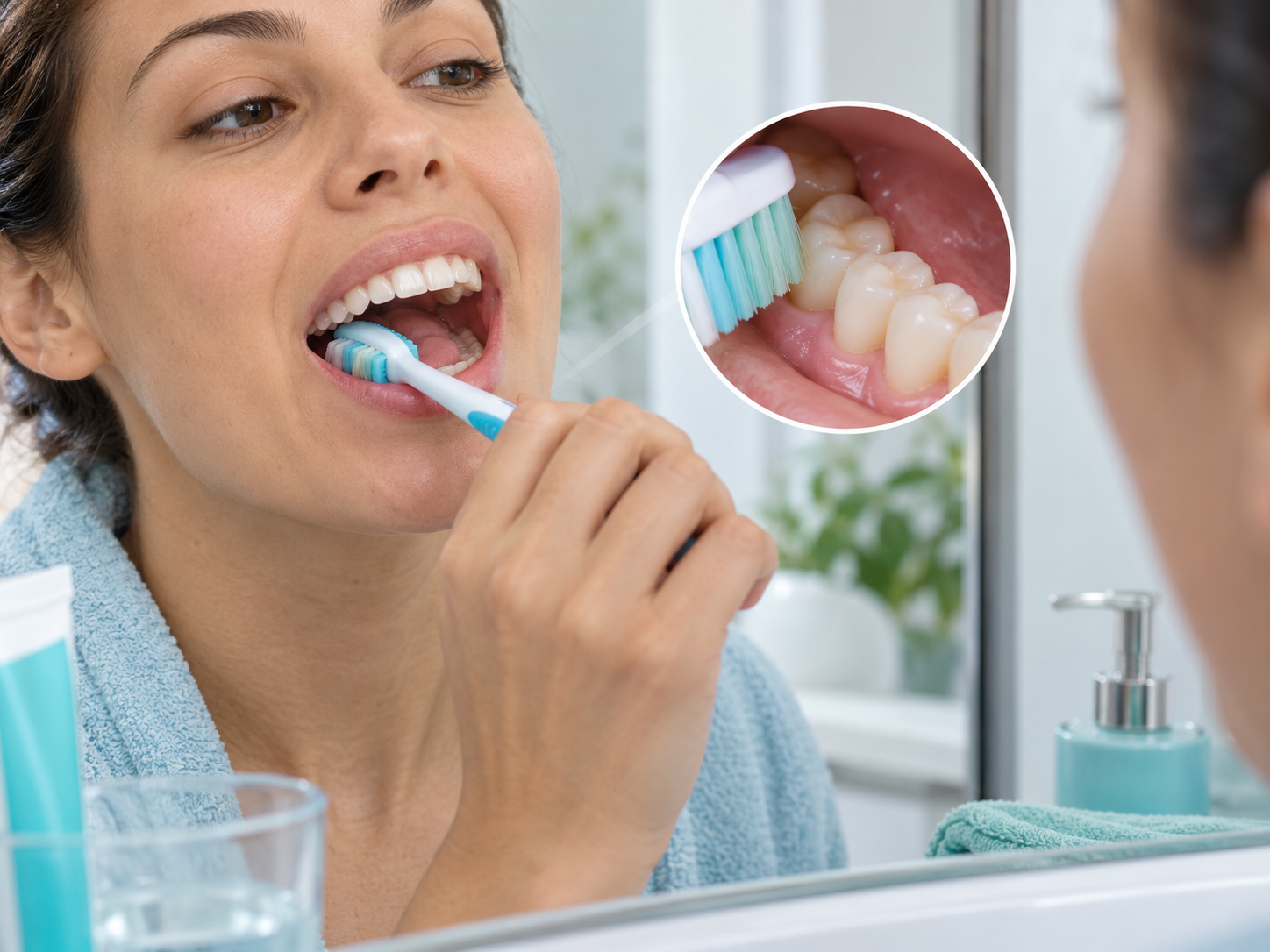
Continue Brushing and Flossing Gently
One of the most common patient mistakes after a root canal is avoiding the treated area entirely during brushing. This is understandable but counterproductive. Food debris and bacteria that accumulate around the treated tooth can cause gum inflammation, which prolongs recovery and increases discomfort.
The correct approach:
- Brush twice daily as usual — use a soft-bristled brush
- Brush gently around the treated tooth — light pressure, do not scrub
- Continue flossing, but guide the floss carefully around the treated tooth rather than snapping it into the gum
- Use a non-alcohol mouthwash if recommended by your dentist — alcohol-based rinses can irritate healing tissue
Keeping the area clean is important not just for comfort but for preventing recontamination of the treated tooth before the permanent crown is placed.
What To Avoid For The First 48 Hours
In addition to the food and drink guidance above, avoid:
- Vigorous rinsing or spitting in the first 24 hours — this can dislodge the temporary filling
- Smoking — nicotine constricts blood vessels and impairs the healing of inflamed tissue around the root tip
- Alcohol — it interacts with some prescription pain medication and can increase bleeding or swelling
- Strenuous exercise in the first 24 hours — elevated blood pressure can intensify throbbing discomfort
When Should You Contact Your Dentist?
Most people recover from a root canal without any major problems, but some symptoms should still be checked by a dentist. Contact your dentist if you experience severe or worsening pain, noticeable swelling around the gum or face, fever, or if you start feeling unwell.
You should also arrange an appointment if your temporary filling comes out, the tooth cracks, or your bite suddenly feels uneven. It is normal for the treated tooth to feel slightly different at first, but if it seems to hit the opposite tooth before your other teeth when you bite down, let your dentist know. A simple bite adjustment may be all that is needed.
In some cases where a tooth cannot be predictably restored or develops further problems, your dentist may discuss other treatment options. You can also read our guide comparing root canal vs tooth extraction in Malaysia to understand how the two treatments differ.