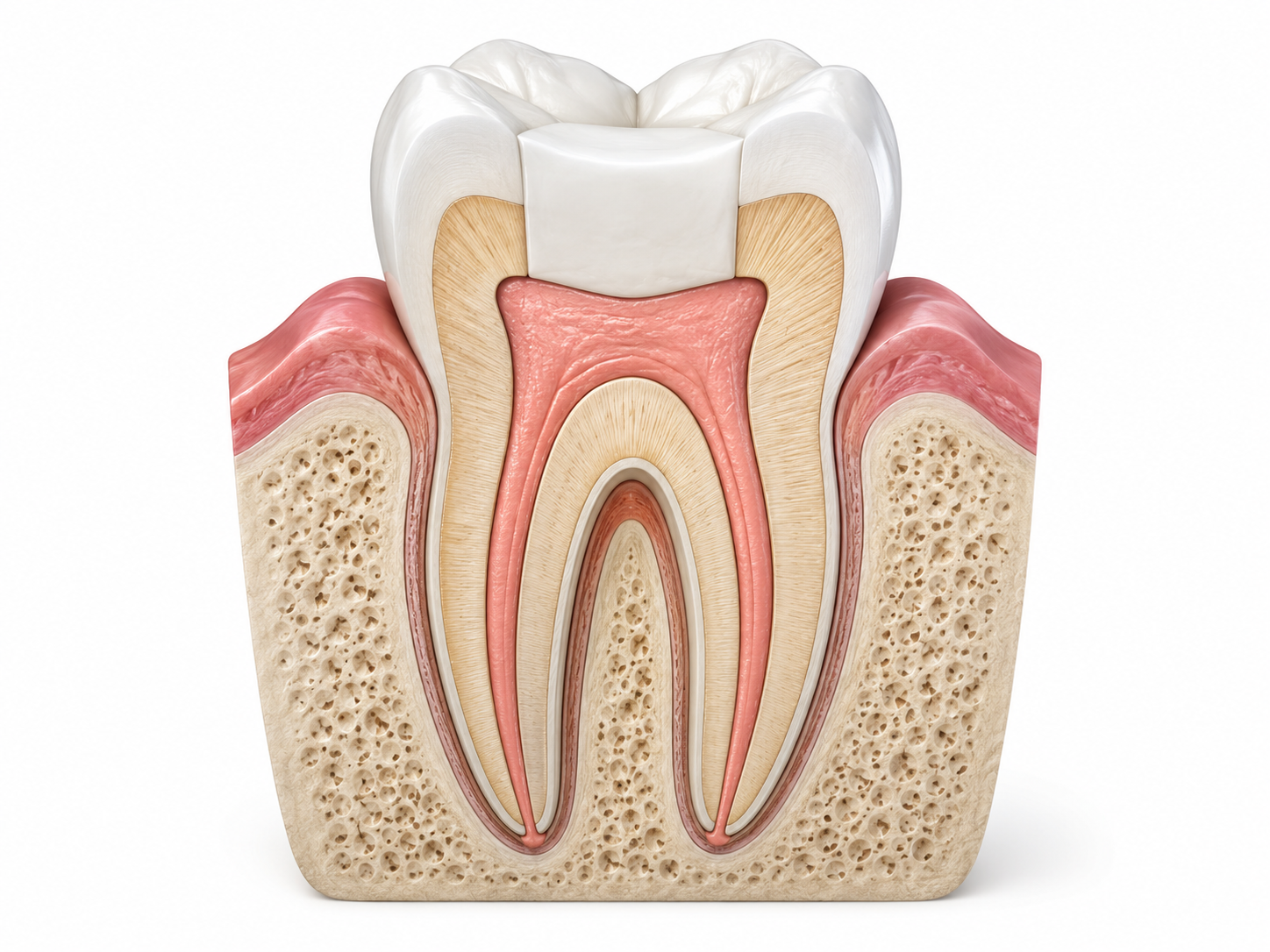




If your dentist has told you that you need a root canal, it is normal to feel concerned. The root canal treatment has a reputation for being painful, but modern root canal procedures are designed to remove the infection causing the pain and preserve your natural tooth. During treatment, the dentist removes inflamed, infected or dead tissue from inside the tooth. The root canals are then cleaned, disinfected, filled and sealed to reduce the risk of bacteria entering again.
This guide explains what happens before, during and after a root canal procedure in Malaysia, including how many visits you may need and what recovery is usually like.
What Is Root Canal Treatment?
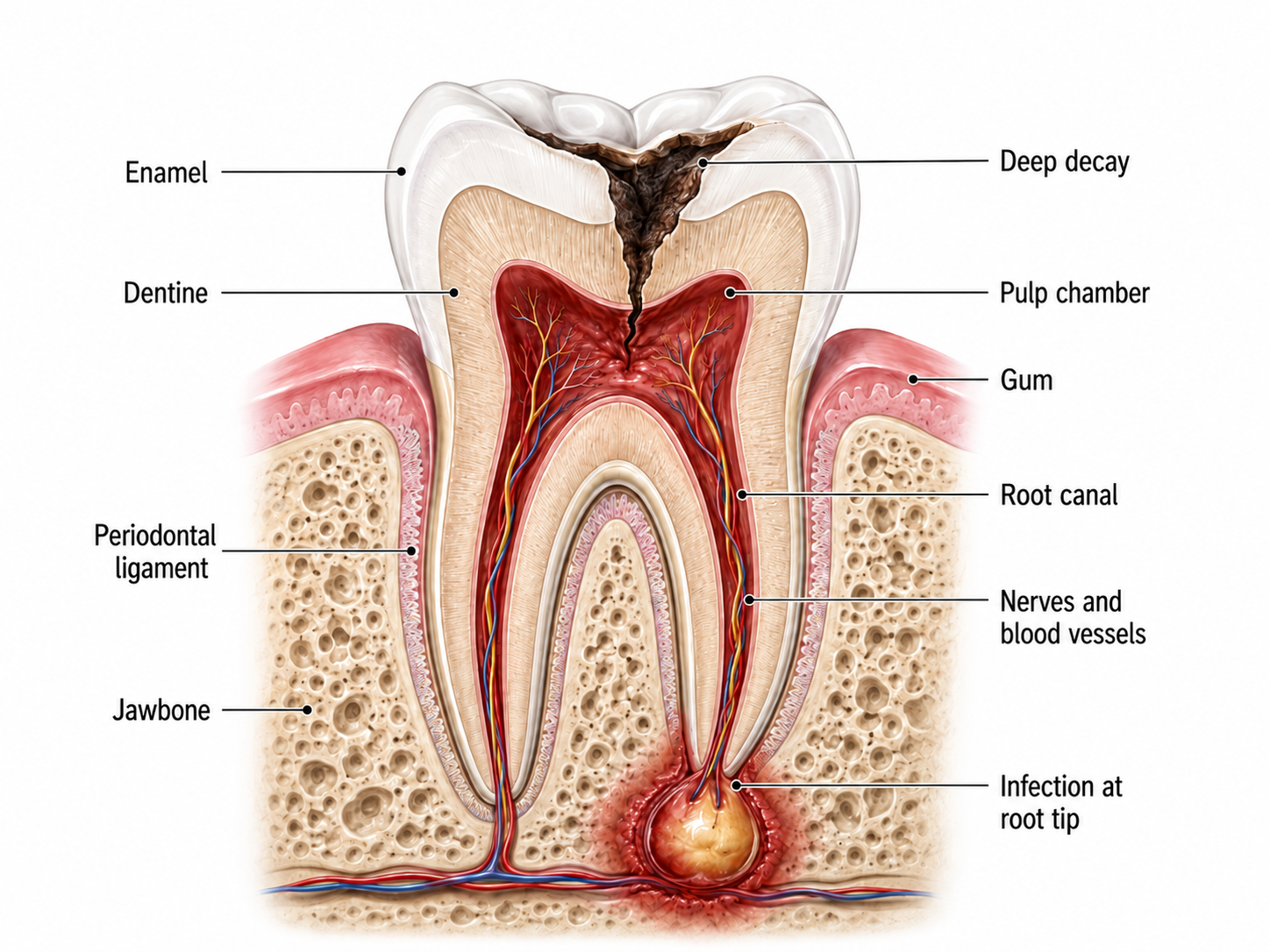
Inside every tooth is a soft tissue called dental pulp. It contains nerves, blood vessels and connective tissue. The pulp may become inflamed or infected because of deep decay, a crack, trauma, a leaking filling or repeated dental treatment.
When the pulp can no longer recover, a normal filling is not enough because it does not remove the damaged tissue inside the roots. Root canal treatment is used to clean the internal space while keeping the outer structure of the tooth in place.
Common signs that may lead to a root canal assessment include:
- Persistent or severe toothache
- Lingering sensitivity to hot or cold
- Pain when biting or chewing
- Swelling or tenderness around the gum
- A small pimple or discharge on the gum
- Darkening of the tooth
- Deep decay or a cracked tooth
Some infected teeth stop hurting when the nerve dies. This does not mean the infection has healed, so a dental examination is still important.
How Many Visits Does Root Canal Treatment Take?
The number of appointments depends on the tooth, the number of canals and the extent of infection. Most cases take between one and three visits.
A simple front tooth with a straightforward canal and limited infection may sometimes be completed in one appointment lasting about 90 to 120 minutes.
Premolars and molars usually have more canals and more complex root shapes. These teeth may require two or three visits, especially when there is active infection, drainage or a need to place antibacterial medication inside the tooth between appointments.
The final crown or permanent restoration may require a separate visit after the root canal has been completed.
Is Root Canal Treatment Painful?
Root canal treatment is normally performed under local anaesthetic. Once the area is numb, you may feel pressure, vibration or movement, but you should not feel sharp pain.
The infection itself is often responsible for the severe pain associated with a root canal tooth. The procedure is performed to remove that source of pain.
After the anaesthetic wears off, mild soreness around the tooth is common for a few days. This is usually manageable with the medication recommended by your dentist. Severe pain, increasing swelling or symptoms that continue to worsen should be checked. Read more about 7 signs you need a root canal in Malaysia to know whether you need it.
Root Canal Treatment Step by Step in Malaysia
Step 1: Examination and Diagnostic Tests
The dentist first asks about your symptoms, medical history and previous treatment on the tooth. The tooth and surrounding gum are then examined. The dentist may gently tap the tooth, apply cold or heat, test your bite and check the gum for swelling or drainage. These tests help determine whether the pulp is inflamed, infected or no longer alive. No single test confirms the diagnosis. Your symptoms, examination and dental X-rays are considered together before treatment is recommended.
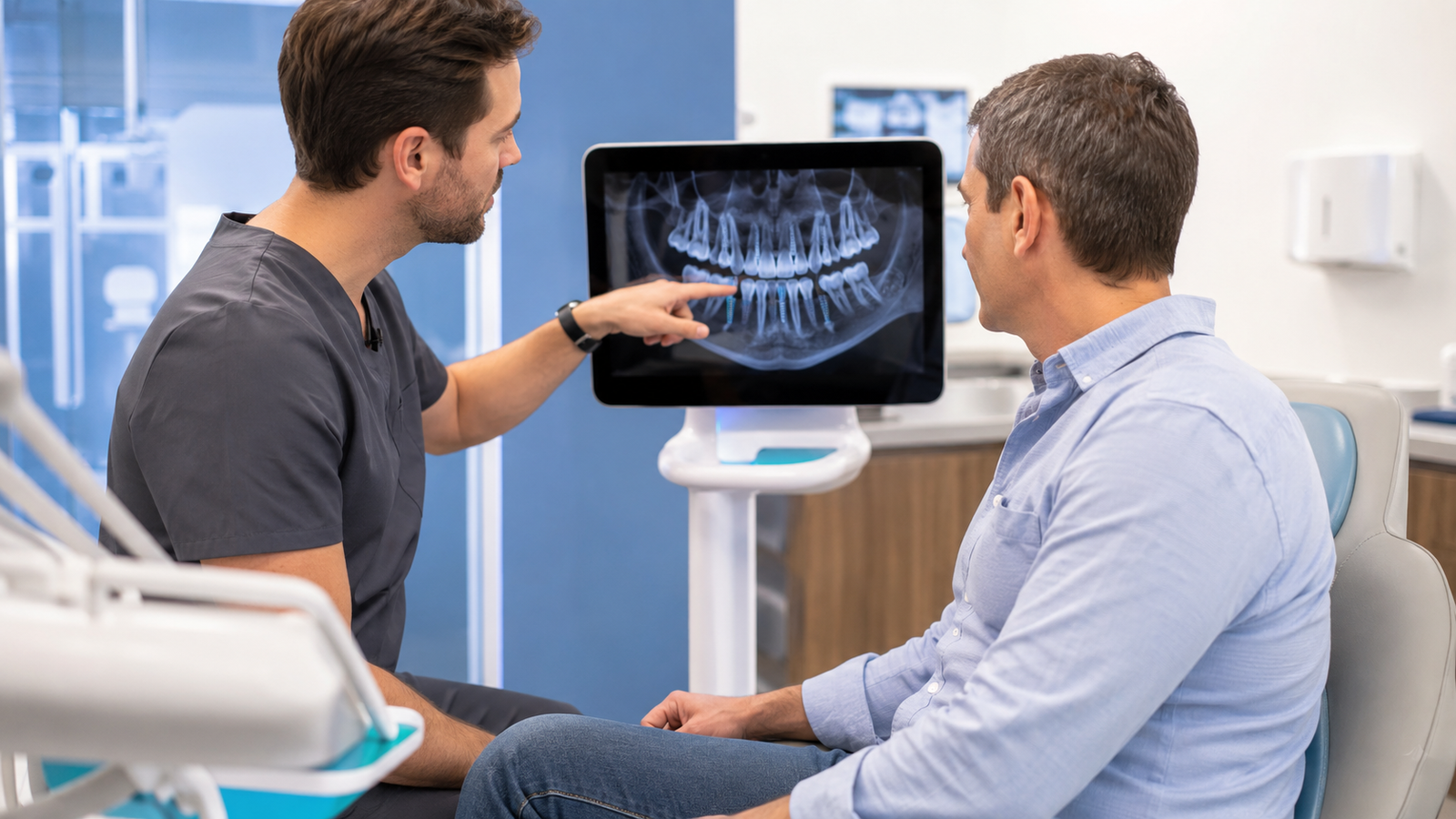
Step 2: Dental X-Rays
An X-ray allows the dentist to see structures that are not visible during a normal examination. It may show:
- The depth of the decay
- The number and shape of the roots
- Changes in the bone around the root
- Existing fillings, crowns or root canal material
- Signs that the tooth may be difficult to restore
Additional X-rays may be taken during treatment to measure the canals and check the final root filling.
Step 3: Confirming That the Tooth Can Be Saved
Before starting, the dentist checks whether the tooth has enough healthy structure to support a reliable restoration. Root canal treatment may not be recommended if the tooth has a severe vertical fracture, decay extending too far below the gum, very poor bone support or too little remaining structure. When the tooth can be restored, preserving it avoids the gap created by extraction and may reduce the need for an implant, bridge or denture later.
Step 4: Local Anaesthetic and Rubber Dam
The dentist numbs the tooth and surrounding area using local anaesthetic. A severely inflamed tooth may occasionally require additional anaesthetic, so tell the dentist if you still feel pain.
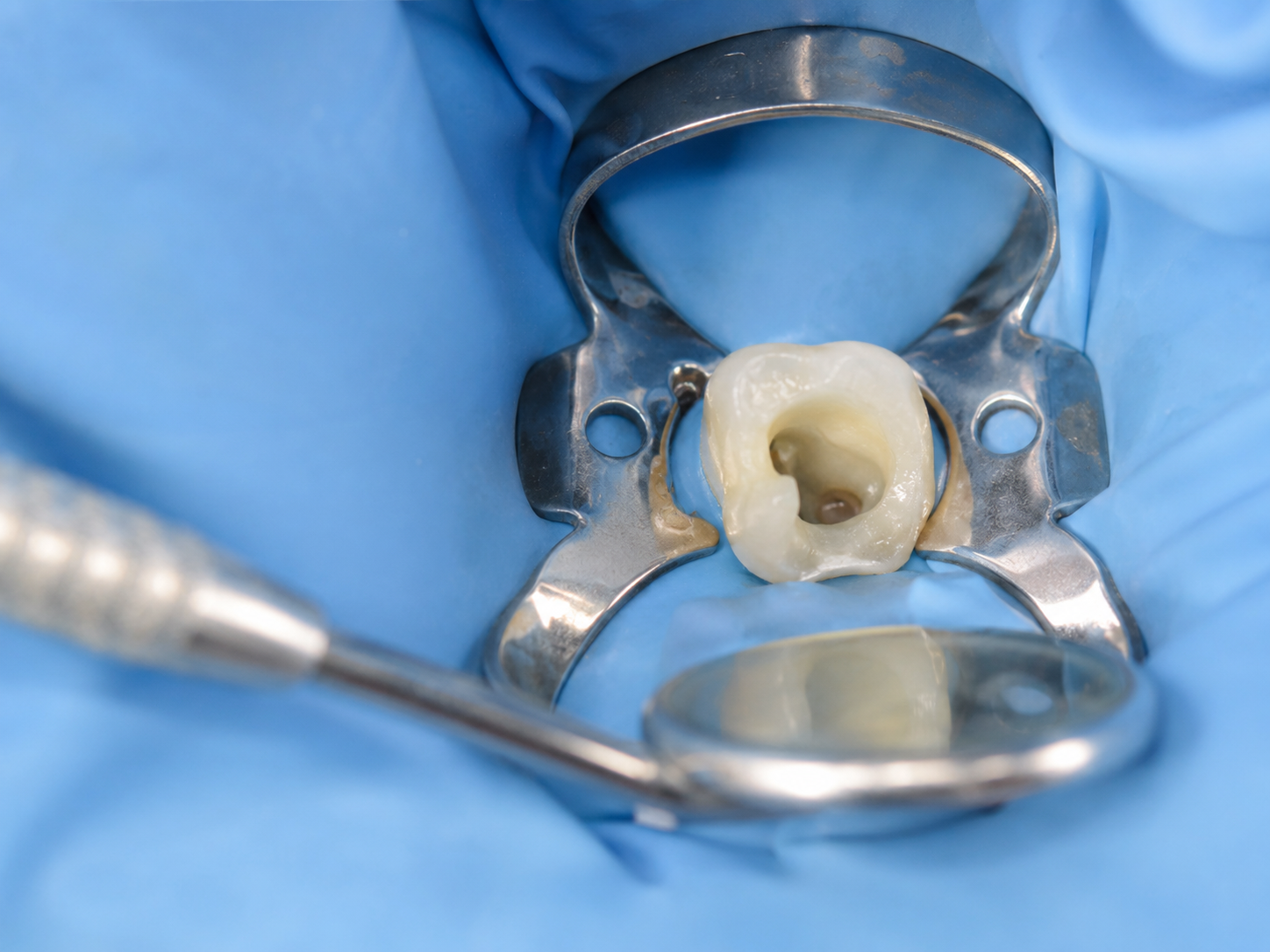
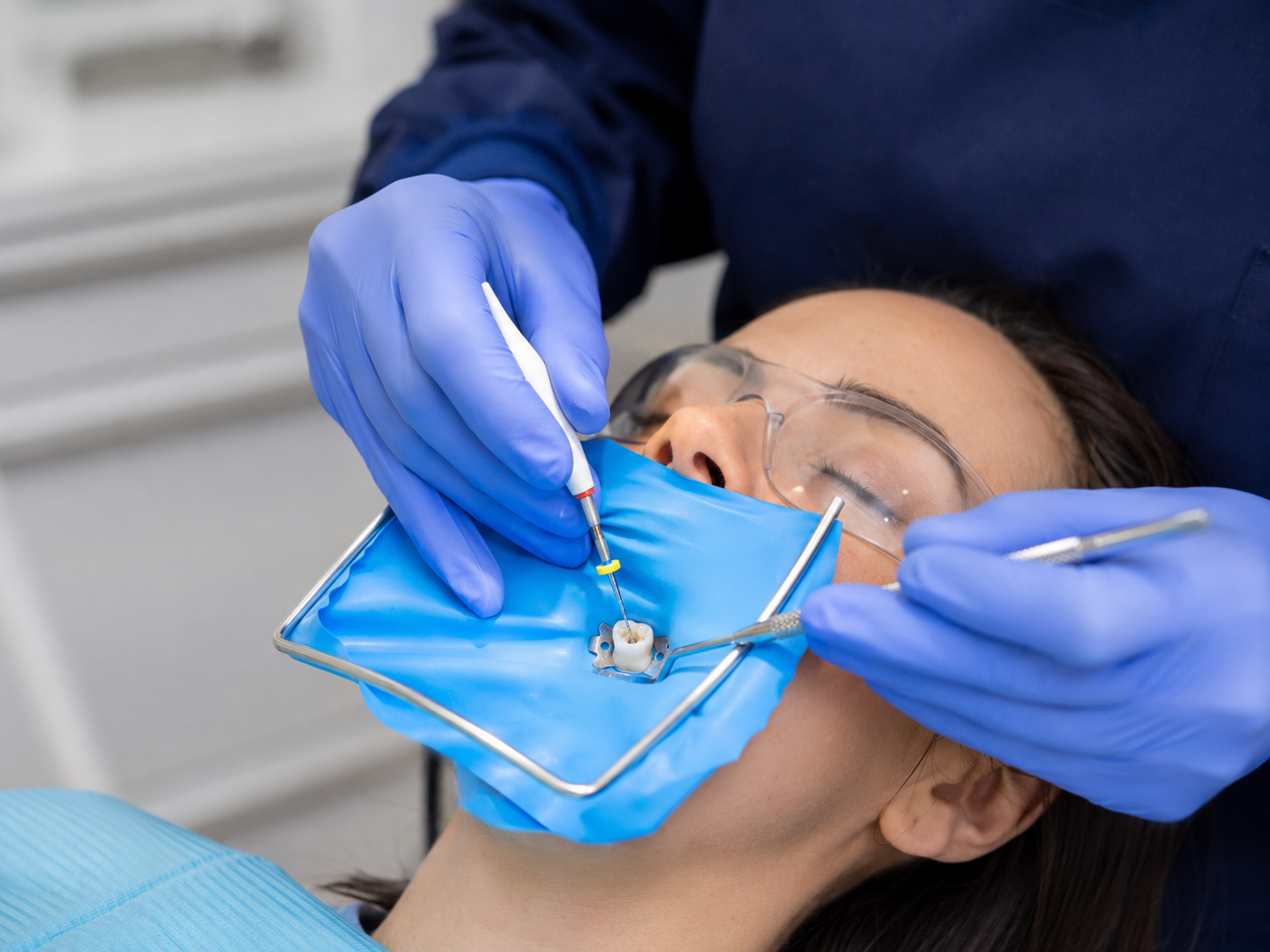
Once the tooth is numb, a rubber dam is placed around it. This thin protective sheet keeps the treatment area dry, prevents saliva and bacteria from entering the canals and protects your mouth from small instruments and cleaning solutions.
Step 5: Creating Access to the Root Canals
A small opening is made through the biting surface or back of the tooth. If the tooth already has a large filling or crown, the dentist may need to work through it or remove part of the existing restoration. The opening allows the dentist to reach the pulp chamber and locate the entrances to the root canals. Front teeth often have a simpler internal structure, while premolars and molars may have several narrow or curved canals. Magnification, lighting and specialised instruments may be used to find them.
Step 6: Measuring the Canals
The dentist measures the length of each canal using an electronic apex locator, dental X-rays or both. This measurement, known as the working length, helps the dentist clean and fill the canal to the correct level without unnecessarily extending beyond the root.
Step 7: Removing the Damaged Pulp
Small instruments called endodontic files are placed inside the canals to remove inflamed, infected or dead pulp tissue. The files are used gradually to clean the internal space while preserving as much of the root structure as possible. Removing the pulp does not remove the tooth. The tooth remains held in place by the gum, periodontal ligament and surrounding jawbone.
Step 8: Cleaning, Shaping and Disinfecting
The canals are shaped so that disinfecting solution can circulate through them and the final filling material can be placed properly. The dentist alternates between using fine instruments and flushing the canals with an antimicrobial solution. This helps remove tissue, debris and bacteria from areas that instruments may not directly reach. This is one of the most important stages of treatment. A root canal involves more than removing the nerve; the full canal system must be cleaned and disinfected as thoroughly as possible.
Step 9: Temporary Medication, If Needed
Some teeth can be cleaned and filled during the same visit. Others require additional time.
A temporary antibacterial dressing may be placed when:
- There is active drainage or significant infection
- The canals are narrow, curved or complicated
- The tooth is undergoing retreatment
- Symptoms need time to settle
- The dentist cannot safely complete treatment that day
The tooth is then sealed with a temporary filling. Attend the next appointment even if the tooth feels better, and contact the clinic if the temporary filling breaks or falls out.
Step 10: Filling and Sealing the Canals
Once the canals are clean, shaped and dry, they are filled with a biocompatible material. Gutta-percha, a rubber-like material used together with dental sealer, is commonly used. The material fills the prepared canal space and reduces the opportunity for bacteria to re-enter. An X-ray may be taken to check the length and density of the root filling.
A temporary or permanent filling is then placed over the access opening. This seal is important because a well-treated canal can become contaminated again if bacteria leak in through a broken or delayed restoration.
Step 11: Rebuilding and Protecting the Tooth
A tooth requiring root canal treatment has often already lost structure because of decay, cracks or previous fillings. After the canals are sealed, the tooth may be restored with:
- A bonded filling
- A core build-up
- An onlay
- A dental crown
- A post and core in selected cases
Front teeth may sometimes be restored with a filling when enough healthy structure remains. Premolars and molars more commonly need a crown because they carry stronger chewing forces and may be more vulnerable to fracture. The dentist will also check your bite. A restoration that is slightly too high can make the tooth sore when chewing and may need adjustment.
Recovery After Root Canal Treatment
The treated tooth and surrounding tissues may feel tender for several days, especially if there was pain or swelling before treatment. You may experience mild soreness when biting, tenderness around the tooth or jaw fatigue from keeping your mouth open during the procedure.
Wait until the numbness has fully worn off before eating to avoid biting your cheek, lip or tongue. Start with softer foods and chew on the opposite side, especially if the tooth has a temporary filling.
Suitable options include rice, porridge, eggs, yoghurt, noodles, soft fish and mashed vegetables. Avoid hard, crunchy or sticky foods until the permanent filling or crown is in place. Continue brushing and flossing, but clean gently around the treated area if it feels sore.
Contact the clinic if you develop:
- Severe or worsening pain
- Increasing facial or gum swelling
- Fever or general illness
- Difficulty opening your mouth
- A temporary filling that has fallen out
- A bite that feels unusually high