




If you have a badly decayed, infected or painful tooth, you may be wondering whether it is better to save the tooth with root canal treatment or remove it completely with a tooth extraction.
In most cases, root canal treatment is preferred if the natural tooth can still be successfully restored. Extraction is generally considered when the tooth is too damaged, fractured or compromised to be saved predictably. However, the right choice depends on more than just how painful the tooth feels. Your dentist will need to assess the remaining tooth structure, roots, surrounding gums and bone, and the extent of the infection before recommending treatment.
Here is what you should know when comparing root canal vs tooth extraction in Malaysia.
What Is the Difference Between Root Canal and Tooth Extraction?
Both treatments can be used to manage a severely damaged or infected tooth, but they take very different approaches.
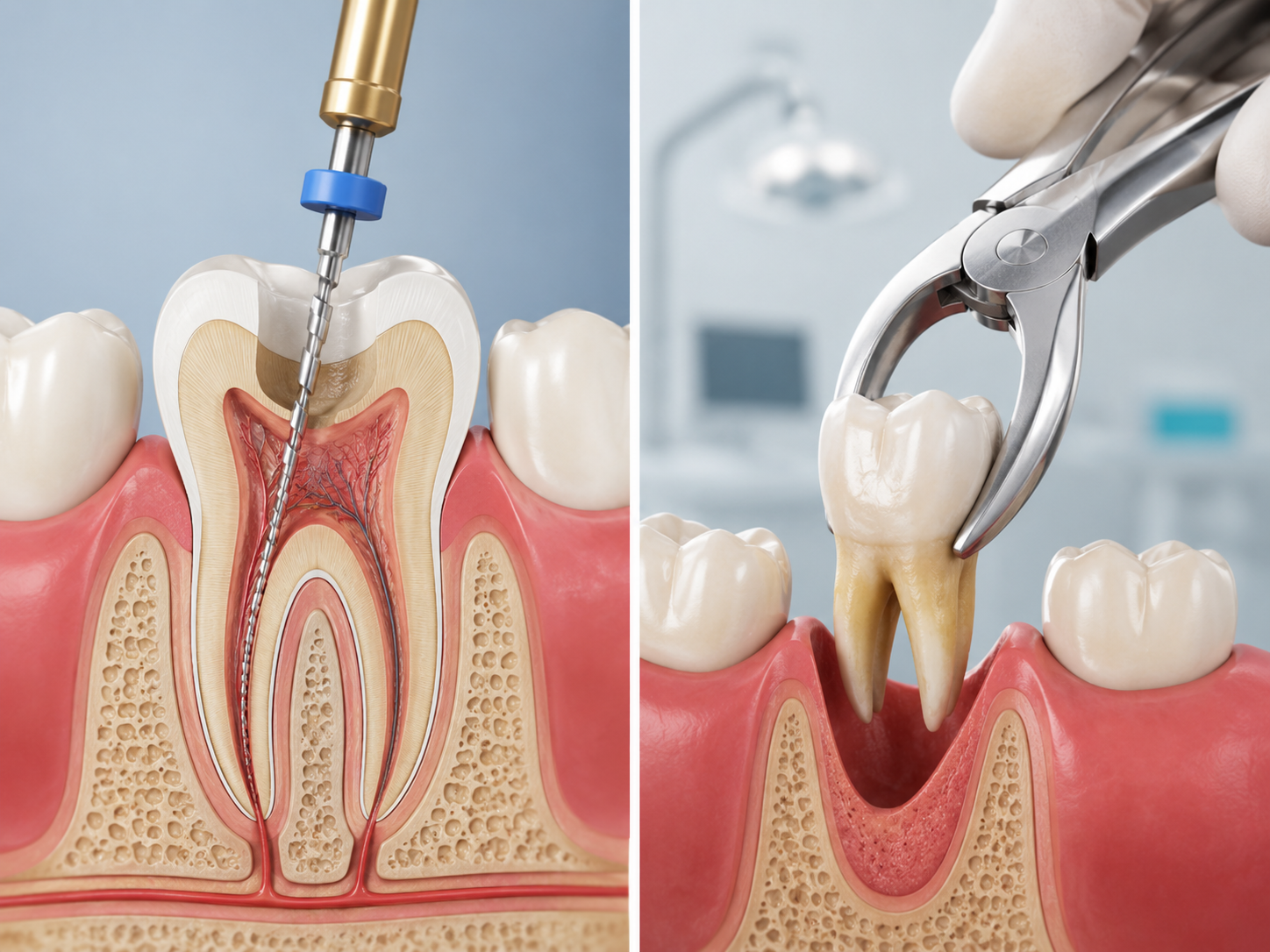
Root canal treatment saves the tooth. The dentist removes the infected or inflamed pulp from inside the tooth, cleans and disinfects the root canals, and seals them. The tooth is then restored, often with a filling or dental crown depending on how much tooth structure remains.
Tooth extraction removes the entire tooth. Once the tooth is removed from its socket, the infection associated with that tooth can be addressed, but you are left with a missing tooth that may need to be replaced.
According to the American Association of Endodontists, preserving a natural tooth is generally preferred whenever it can be predictably treated because a natural tooth continues to provide normal appearance and function.
Root Canal Treatment | Tooth Extraction | |
What happens? | Infected tissue inside the tooth is removed | Entire tooth is removed |
Natural tooth preserved? | Yes | No |
Main goal | Eliminate infection while saving the tooth | Remove a tooth that cannot or should not be retained |
Tooth replacement needed? | Usually no | Often recommended |
Restoration afterwards | Filling or crown may be required | Implant, bridge or denture may be considered |
Best suited for | Restorable infected or damaged teeth | Teeth with poor or hopeless prognosis |
Treatment planning | Focuses on saving the existing tooth | Includes planning for the resulting gap |
Which Is Better: Root Canal or Tooth Extraction?
If a tooth can be predictably saved, root canal treatment is usually the better option. Keeping your natural tooth means you can continue biting and chewing with the same tooth rather than having to replace it with an artificial one.
Root canal treatment also avoids creating a gap between your teeth. When a tooth is extracted and not replaced, neighbouring teeth may gradually move towards the empty space, potentially affecting your bite and chewing function. Replacing the missing tooth may therefore involve additional treatment such as a dental implant, bridge or partial denture.
However, that does not mean every damaged tooth should receive root canal treatment. A root canal can only be worthwhile if there is enough healthy tooth and supporting structure remaining for the tooth to continue functioning afterwards. If the tooth has a poor long-term prognosis, removing it may be the more practical option.
When to Do Root Canal Treatment?
Root canal treatment is normally considered when the soft tissue inside the tooth, known as the dental pulp, becomes irreversibly inflamed, damaged or infected. The aim is to remove the affected tissue while keeping the outer structure and roots of the natural tooth.
The Tooth is Saveable
A tooth is considered saveable when there is enough of the crown structure remains above the gum line to be restored with a filling or crown; the root is intact and healthy; there is adequate bone support around the root and the infection is contained to the pulp or the tissue immediately surrounding it, rather than having caused extensive bone destruction.
Your dentist assesses these criteria through a clinical examination and periapical X-ray. In some cases, a CBCT scan provides a more detailed picture of root anatomy and bone condition. These findings determine whether root canal treatment is clinically appropriate for your tooth. If treatment is recommended, you can learn more about the root canal procedure and what happens at each stage.
Why Saving Your Natural Tooth is Worth Prioritising
Keeping your natural tooth is usually the preferred option when it can be predictably saved. A natural tooth is already adapted to your bite, surrounding gums, and neighbouring teeth, helping maintain normal chewing function and supporting the surrounding jawbone.
With successful root canal treatment and the right restoration, such as a crown, the tooth can continue functioning for many years. By comparison, extracting a tooth can lead to gradual bone loss if the space is left untreated. Replacing it with a dental implant can provide a strong result, but usually involves more procedures, appointments and healing time. When a tooth is still saveable, root canal treatment allows you to preserve the natural structure your mouth was designed to use.
What Happens to Your Jawbone If You Extract Without Replacing The Tooth
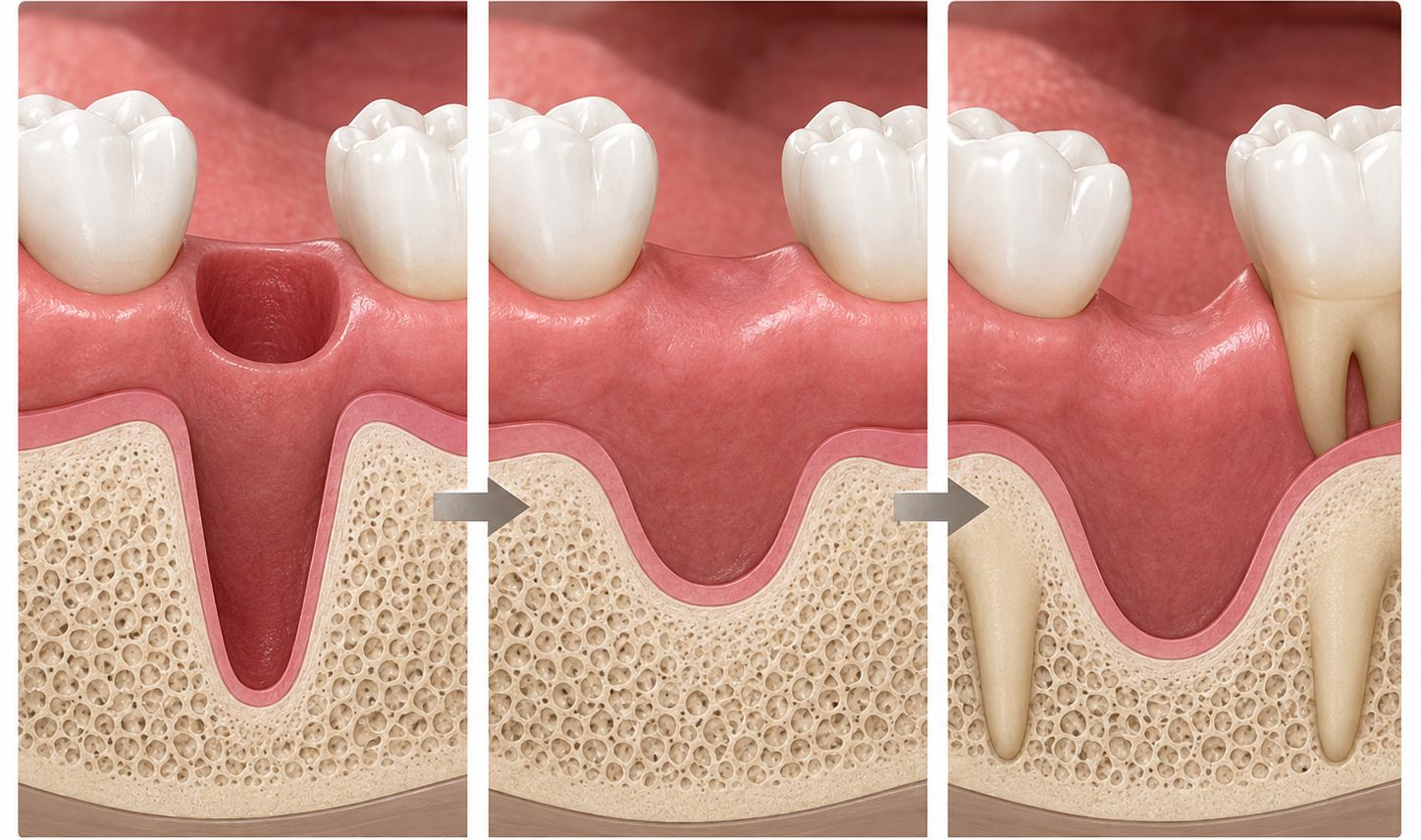
After extraction, the jawbone at the missing tooth site gradually resorbs because it no longer receives stimulation from a tooth root. Bone loss can begin within the first year and continue progressively over time. If the tooth cannot be saved, a dental implant may be considered to replace the missing tooth and restore function.
As bone volume reduces, adjacent teeth may tilt toward the gap, the gum contour changes, and any future implant placement may require bone grafting that would not have been necessary had the tooth been saved or replaced promptly. For front teeth, the impact on the smile and facial profile can become visible over time; the gum and bone that supported the tooth’s appearance no longer have a reason to maintain their shape.
When to Extract a Tooth?
5 Clinical Situations Where Extraction is Genuinely The Better Option
Extraction is not a failure. In the following situations, it is the appropriate and professionally recommended course of action:
- The tooth is fractured below the gum line. A crack or fracture that extends below the bone level cannot be restored. There is no structural foundation for a crown, and the tooth cannot be saved regardless of the state of the pulp.
- Severe bone loss has made the tooth periodontally hopeless. If gum disease or infection has destroyed the majority of the bone support around the root, the tooth has no structural anchorage and will not remain stable even after root canal treatment.
- Root canal treatment has already failed on this tooth. A previously root-treated tooth that re-infects and is not a candidate for re-treatment or apicoectomy may warrant tooth extraction.
- The tooth is a badly positioned or impacted wisdom tooth. Wisdom teeth that are impacted, causing recurrent infection, or damaging adjacent teeth are removed rather than root-treated because they serve no functional role.
- Orthodontic treatment requires space. Strategic extraction of a healthy premolar is sometimes recommended as part of a braces treatment plan to create the space needed for proper tooth alignment.
Root Canal or Extraction: How Does a Dentist Decide?
There is no single treatment that is right for every patient.
Before deciding, your dentist may consider:
- how much healthy tooth structure remains
- how far the decay or infection has progressed
- whether the roots are fractured
- the amount of bone supporting the tooth
- the condition of the gums
- whether the tooth can be properly restored
- previous dental treatment on the tooth
- your bite and surrounding teeth
- your overall treatment goals
- the expected long-term prognosis
Dental X-rays are often important because some problems around the root and supporting bone cannot be seen simply by looking inside the mouth.