

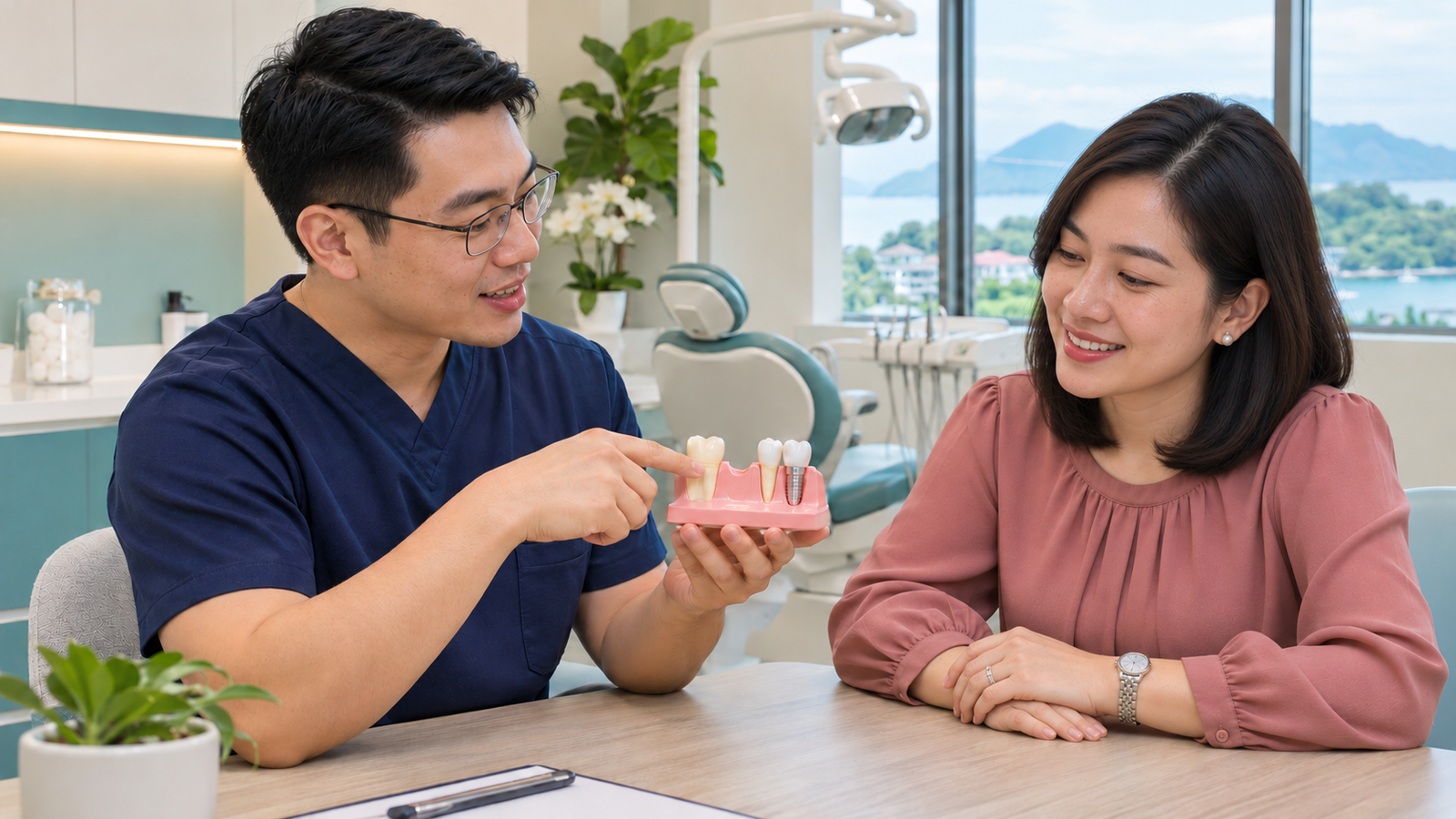
You may be suitable for dental implants if your gums are healthy, your jawbone can support an implant and your general health allows you to heal after surgery. Having a missing tooth is the starting point, but a dental assessment determines whether an implant is a sensible option for you.
Perhaps you have been chewing on one side for months. Or you are tired of noticing a gap whenever you smile. Before choosing a replacement, it helps to understand what makes treatment suitable for your mouth.
If you are considering dental implants in Kota Kinabalu, these are three important areas your dentist assesses before planning treatment.
The 3 Things Your Dentist Checks First
Before any treatment is planned, your dentist looks at three areas. Each one affects whether the implant can fuse with your jawbone and stay healthy for years.
Is There Enough Jawbone to Support an Implant?
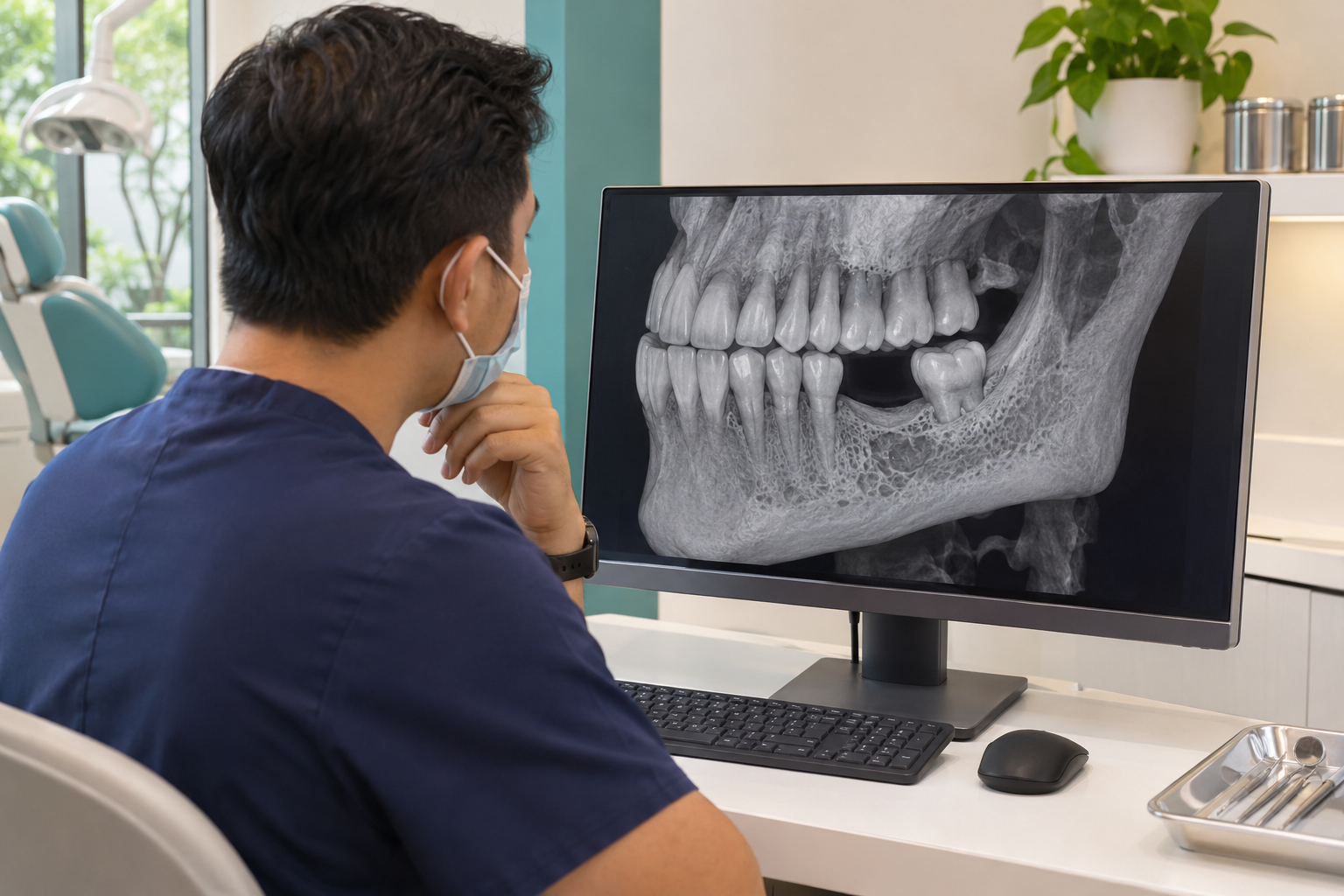
A dental implant is a small titanium post placed into the jawbone. Over the following three to six months, the bone grows around the post and holds it firmly in place. This process is called osseointegration, and it only works if there is enough bone to hold the implant.
Your dentist checks this with a CBCT scan, a 3D scan that shows far more than a standard dental X-ray. It reveals:
- How tall and how wide the bone is at the missing tooth site
- Where the nerves are positioned, so they can be avoided
- Where the sinus sits, which matters for upper back teeth
Bone shrinks over time once a tooth is gone, because the jaw no longer receives the stimulation it used to get from the tooth root. This means the longer a tooth has been missing, the more bone may have been lost.
What If You Have Bone Loss?
It does not always rule out an implant. Depending on the area, your dentist may suggest a bone graft to rebuild the site, or a sinus lift for upper back teeth. These steps add several months to the timeline, but they can make an implant possible when it otherwise would not be. For the full timeline, see our guide to the dental implant procedure in Malaysia.
Are Your Gums and Remaining Teeth Healthy?
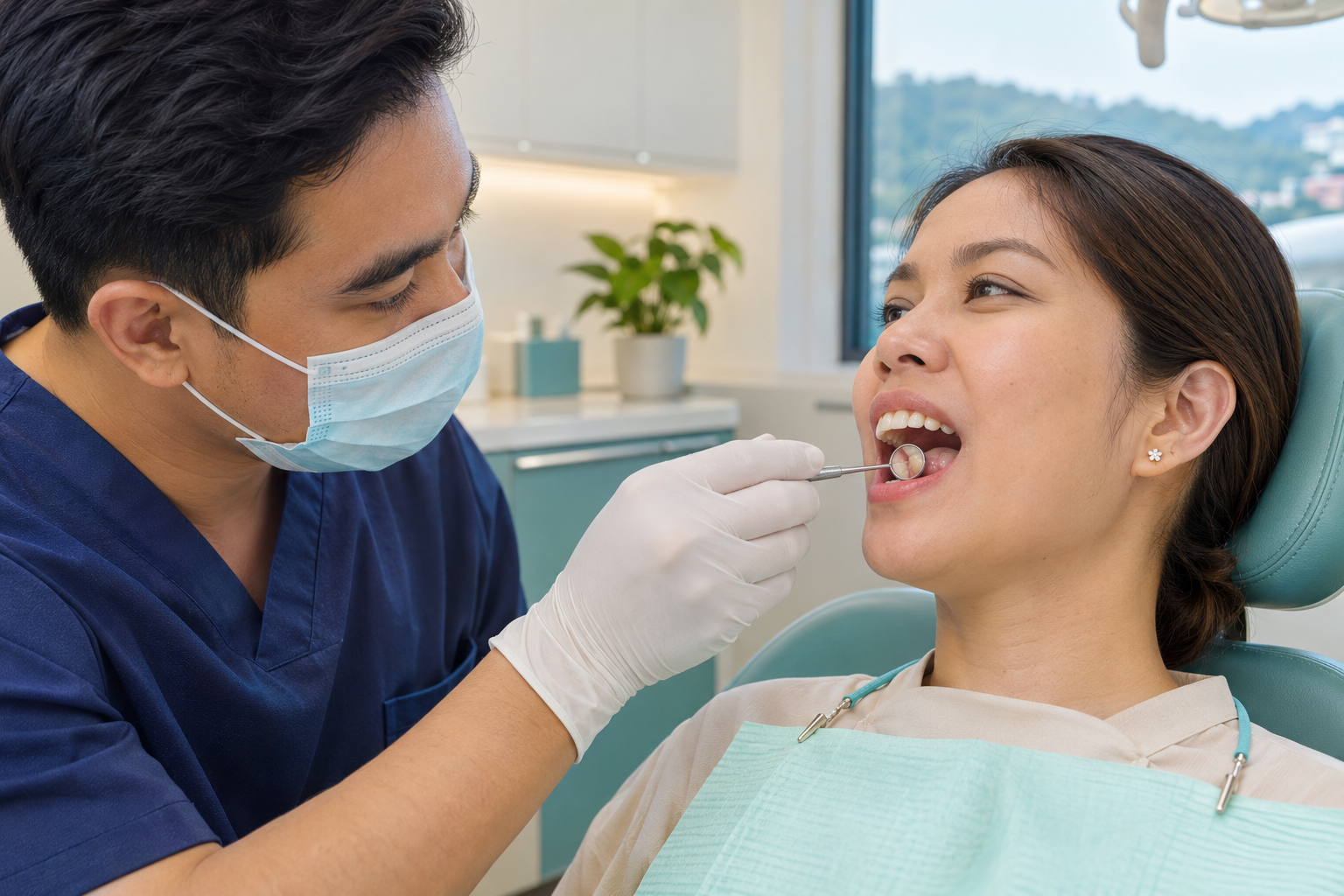
An implant needs a healthy environment. Your dentist checks for gum inflammation, infection and problems with neighbouring teeth before recommending surgery.
Bleeding when brushing, swollen gums and persistent bad breath are worth mentioning during your consultation. They do not automatically rule out implants, but they may point to an issue that needs attention first.
Gum Disease May Need Treatment First
Gum disease can damage the tissues and bone supporting your teeth. A history of gum disease also matters when assessing the risk of inflammation around a future implant.
Your dentist may recommend improving plaque control, professional cleaning or further gum treatment before moving ahead. The appropriate treatment depends on the severity of the problem.
Replacing a missing tooth should be part of a plan to keep the whole mouth healthy.
Your Cleaning Routine Matters Too
An implant cannot develop tooth decay, but the tissues around it can become inflamed. In some cases, this inflammation affects the supporting bone.
That is why daily cleaning and regular reviews remain essential after treatment. Your dentist can show you how to clean around the proposed replacement and check whether you can comfortably reach the area.
Can Your Health and Habits Support Healing?
Dental implants involve surgery and a period of healing. Your medical history, medication and tobacco use therefore matter alongside the condition of your mouth.
Bring an up-to-date medication list and tell your dentist about ongoing medical care. Include prescribed medicines, supplements and any previous problems with healing after a procedure.
Medical Conditions Need Individual Assessment
Conditions such as diabetes can affect healing, so your dentist needs to understand your health status before planning surgery.
A medical condition does not always mean a simple yes or no. Your dentist may need further information or advice from your treating doctor to decide whether treatment can proceed safely.
Do not stop or change medication yourself in preparation for an appointment.
Smoking and Long-Term Care Matter
Tobacco use can slow healing and is associated with problems around implants. Discuss smoking openly so your dentist can explain how it affects your individual risk.
Your dentist will also discuss follow-up appointments. Implant care continues after the replacement tooth is fitted, with cleaning and professional reviews helping to maintain the surrounding tissues.
Age Is Only Part of the Picture
Implants are generally considered after jaw growth has finished. For older adults, suitability depends more on health, bone support and oral condition than age alone. Instead of assuming you are too old, arrange an assessment and ask what options fit your situation.
Who May Need to Wait, or Consider Other Options?
Some people are better off waiting or exploring other treatments first. This might apply if you have:
- Active gum disease or untreated decay that has not yet been treated
- A medical condition that is not currently well controlled
- Heavy smoking that you are not ready to change
- Jaw growth that is not yet complete, which is the case for teenagers. Implants are generally placed once growth has finished.
If an implant is not right for you, there are other ways to replace a missing tooth, such as a bridge or a partial denture. Our guide on dental implant or bridge compares the options so you can discuss them with your dentist.
What Happens at an Implant Suitability Consultation?
The first visit is about finding out where you stand. Here is what to expect:
1. Examination.
Your dentist checks your teeth, gums and bite.
2. Medical history.
You discuss your health, medications and whether you smoke.
3. CBCT scan.
This gives a 3D view of your jawbone.
4. Discussion of your options.
Your dentist explains what they see and what the next steps could be.
You will usually hear one of three answers: you are ready for an implant, you can proceed after some preparation, or an implant is not the best option and here is what we suggest instead. All three are useful, because each one tells you what to do next.
Quick Checklist: Are You Likely to Be a Good Candidate?
This is not a diagnosis. It simply helps you think about where you might stand before you see a dentist.
Question | If you answer “yes” |
Have you lost a tooth, or been told one needs to be removed? | An implant may be an option |
Are your gums healthy, with no bleeding or loose teeth? | Good sign |
Do you have untreated tooth decay or gum disease? | Treat this first |
Is any long-term condition (such as diabetes) well controlled? | Usually fine |
Have you had radiation to the head or neck? | Tell your dentist |
Do you smoke? | Raises risk; discuss with your dentist |
Has the tooth been missing for many years? | Bone may need checking |
Are you over 18 with finished jaw growth? | Generally suitable age |