

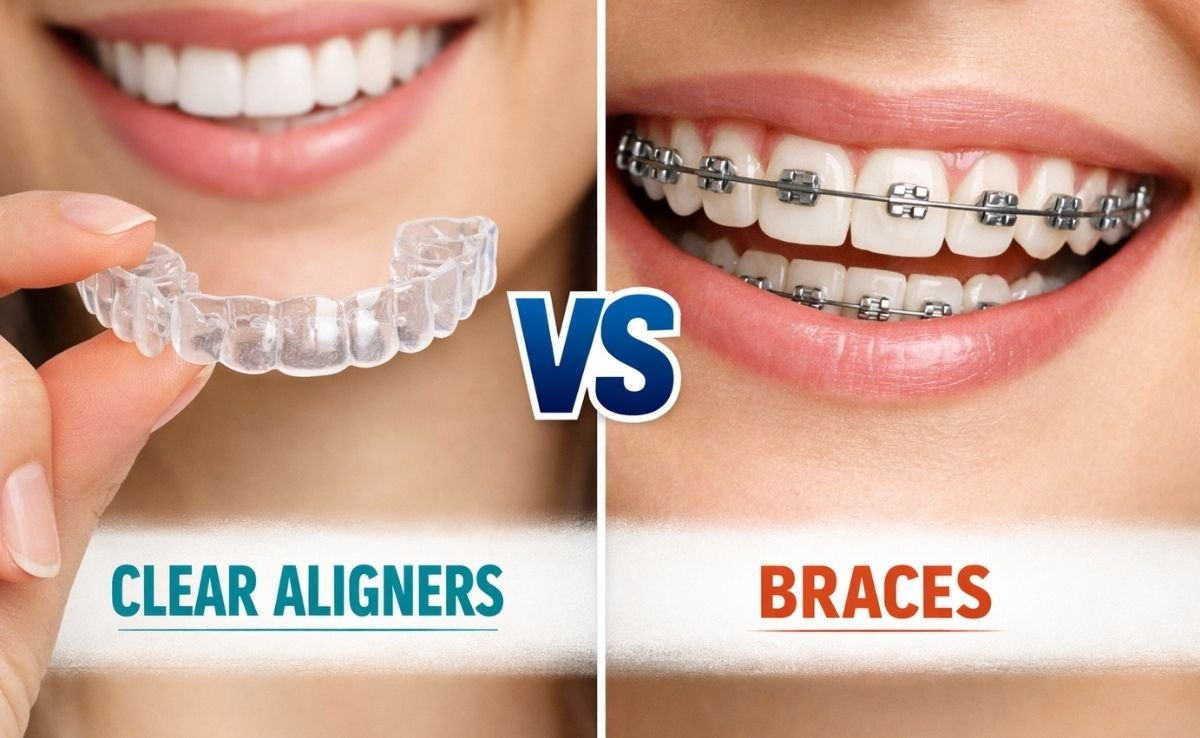
Clear aligners vs braces — the better option depends on how severe your misaligned teeth are, how committed you are to treatment, and what kind of lifestyle you lead. Some smiles respond beautifully to removable aligners. Others need the precision and strength of fixed braces.
If you’re exploring getting braces in Kota Kinabalu, it helps to understand what each system actually does before committing to months of orthodontic work.
Let’s break it down properly.
How Do Clear Aligners Work?
Clear aligners are custom-made transparent trays that gradually move your teeth into position. Each set is worn for about one to two weeks before switching to the next. The trays apply controlled pressure based on a digital treatment plan created using 3D scans of your teeth. Each tray is slightly different from the previous one. That difference pushes specific teeth a small amount at a time. Over months, those micro-movements add up to visible alignment changes.
Clinical studies show that aligners can effectively treat mild to moderate crowding and spacing when worn consistently. Research published in the American Journal of Orthodontics and Dentofacial Orthopedics indicates that aligners are effective for controlled tipping movements but may be less predictable for complex root movements.
That’s where discipline comes in. Aligners must be worn at least 20 to 22 hours daily. Remove them too often and progress slows down.
How Do Braces Work?
Traditional braces use brackets bonded to your teeth and connected by wires. These wires are adjusted periodically to guide teeth into alignment over time. On average, the timeline usually ranges from 18 to 24 months, depending on case complexity. Some mild cases finish earlier. Severe bite issues may take longer.
Braces apply continuous pressure because they are fixed. That means results do not depend on patient compliance the same way aligners do. For complex crowding, rotated teeth, or major bite correction, braces remain one of the most reliable orthodontic tools available.
How Long Do You Have To Wear Braces For?
Your orthodontist will assess bone structure, jaw alignment, and spacing before estimating duration. There is no one-size-fits-all timeline.
Clear Aligner vs Invisalign – Is There a Difference?
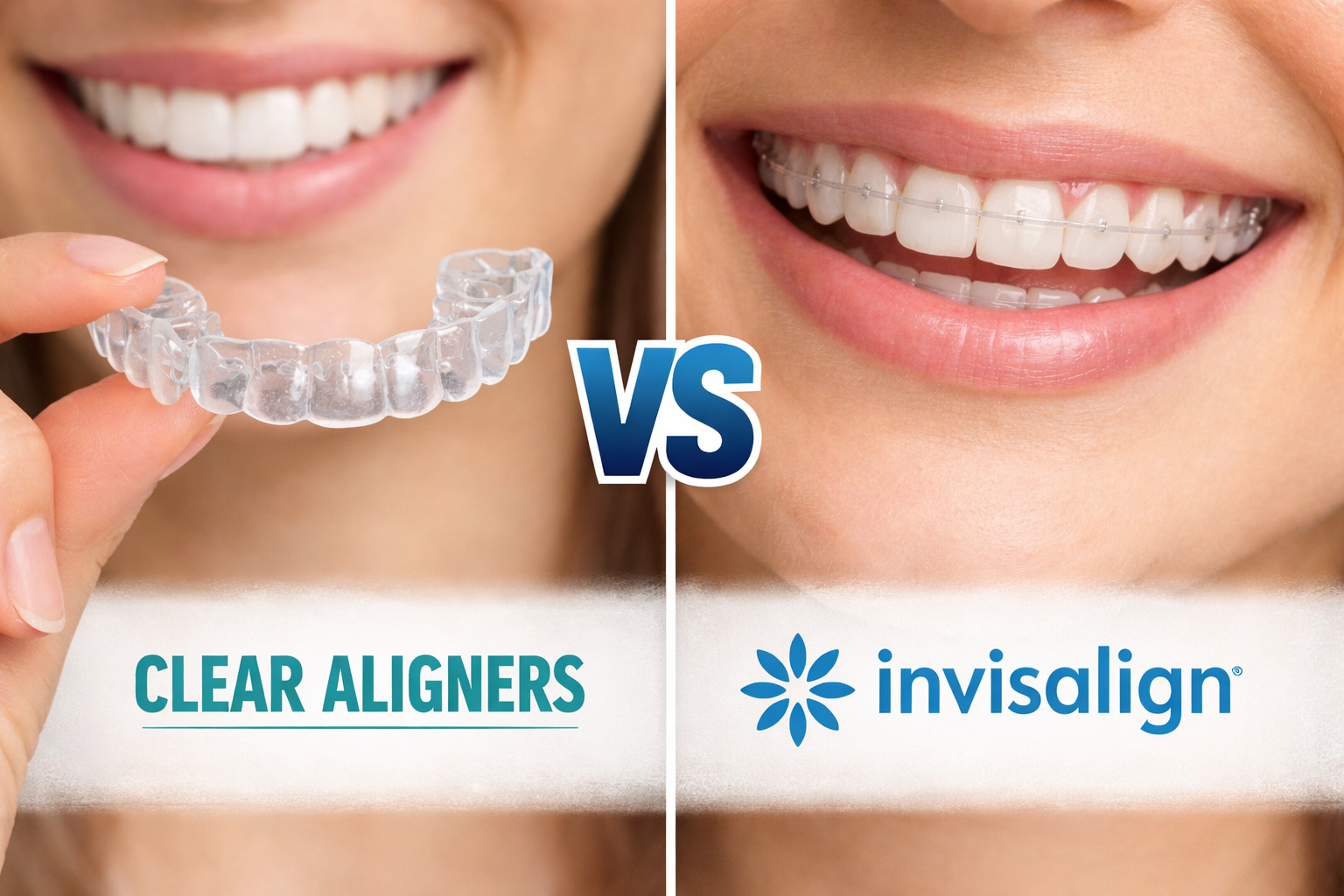
This question comes up often. Invisalign is a brand. Clear aligners are a category of treatment.
When people search clear aligner vs Invisalign, they are usually comparing generic aligners with Invisalign’s proprietary system. Invisalign uses SmartTrack material and advanced digital planning software. Other aligner systems may use different materials or lab processes.
Effectiveness depends more on case selection and clinical planning than branding alone. A well-planned aligner case will outperform a poorly designed one regardless of brand name.
Treatment Duration – Which Works Faster?
How Long Does Clear Aligners Take to Work?
For mild to moderate cases, aligners typically take between *6 and 18 months. Minor spacing may resolve within *6 months. More complex alignment often approaches *18 months.
However, this assumes strict compliance. Wearing aligners less than recommended can extend treatment time significantly.
How Long Does It Take for Braces to Work?
In general, braces often require *18 to 24 months. In more complex skeletal cases, treatment may exceed *two years.
Braces tend to be more predictable for severe crowding or bite correction because they offer better torque and rotational control. Aligners may require attachments or refinements to achieve similar outcomes.
*Disclaimer: The duration cited here is based on existing research done by other clinics. The results may vary from each patient depending on their bone health, metabolism, and more. For more information, contact our friendly staff to get a quote.
I Have Misaligned Teeth. Should I Get Clear Aligners Or Braces?
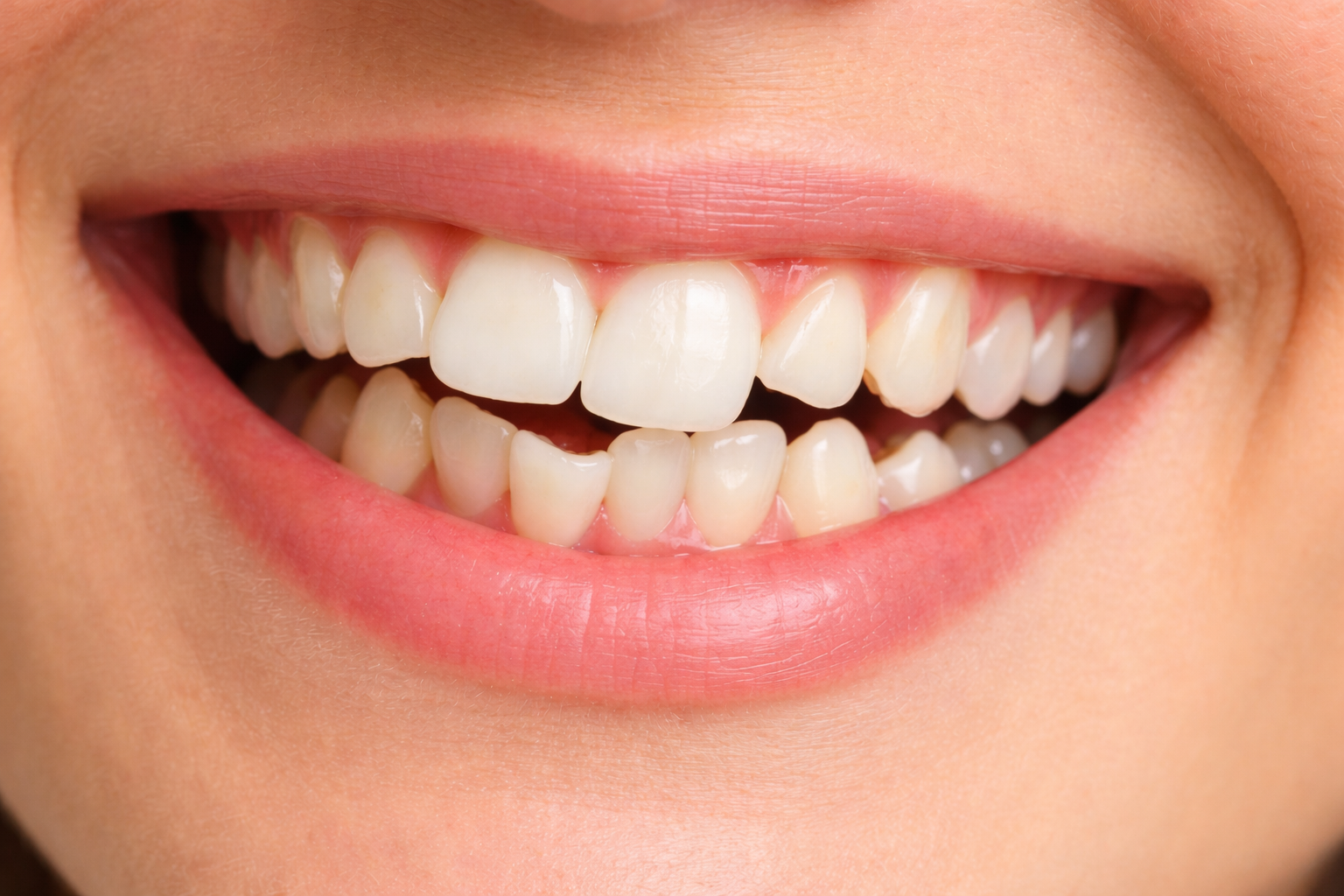
Clear Aligners Help Fix Mild to Moderate Crowding
Clear aligners perform well for minor spacing, mild crowding, and small bite adjustments. Adults who want discreet treatment often prefer this route.
Severe Misalignment and Bite Issues
Braces are generally stronger when treating significant overbites, underbites, crossbites, or heavily crooked teeth. Their fixed system allows precise control over tooth movement in three dimensions.
For patients with complex orthodontic needs, braces remain the more predictable solution.
Comfort, Cost, Appearance, and Daily Life
Clear aligners are nearly invisible. They can be removed during meals, which means no dietary restrictions. You can still enjoy your favourite laksa or crunchy snacks without worrying about breaking brackets.
Braces, on the other hand, are visible. They may cause mild soreness after adjustments. A strict diet must be adhered to at all times. In terms of pricing, braces tend to be more affordable compared to clear aligners.
Teenagers often benefit from supervision during treatment. For parents in Sabah looking for early orthodontic guidance, you may explore our support from a kid dentist in Kota Kinabalu who understands growth and bite development.
Adults who are also considering cosmetic improvements may combine orthodontic treatment with other procedures like teeth whitening or aesthetic restorations under comprehensive dental care.
What Most People Overlook About Braces and Clear Aligners
Aligners demand discipline. Thus, forgetting to wear them often slows results, especially when the wearer often misplaces trays. Visually, clear aligners offer discretion and removability. They suit mild to moderate cases and adults concerned about appearance.
In comparison with braces, it requires careful cleaning around brackets to prevent plaque buildup, and regular dental visits are essential. However, braces provide constant force and greater control. They are reliable for complex orthodontic corrections and do not rely on patient compliance to function.
In short, neither system is “easier.” They simply require different forms of commitment.
Who Should Go For Braces?
Braces are ideal for patients with severe misalignment, bite issues, or teenagers who may struggle with wearing removable trays consistently.
They are also suitable when maximum control is required for predictable movement.
Who Should Go For Clear Aligners?
Clear aligners are suitable for adults or older teens with mild to moderate crowding who can commit to wearing trays consistently.
They work well for patients prioritising appearance and flexibility during treatment.