Dental crowns in Malaysia typically range from RM800 to RM2,500 depending on the material used, with options like zirconia, porcelain, and metal offering different levels of strength, aesthetics, and durability. If you’re considering dental crown treatment in Kota Kinabalu , understanding the types of crowns available and their price differences can help you choose the right option for your tooth and budget.
At first glance, all dental crowns may seem similar, they all cover and protect damaged teeth. But in reality, the material used plays a major role in how long the crown lasts, how natural it looks, and how much it costs.
What Is a Dental Crown and Why Do You Need One?
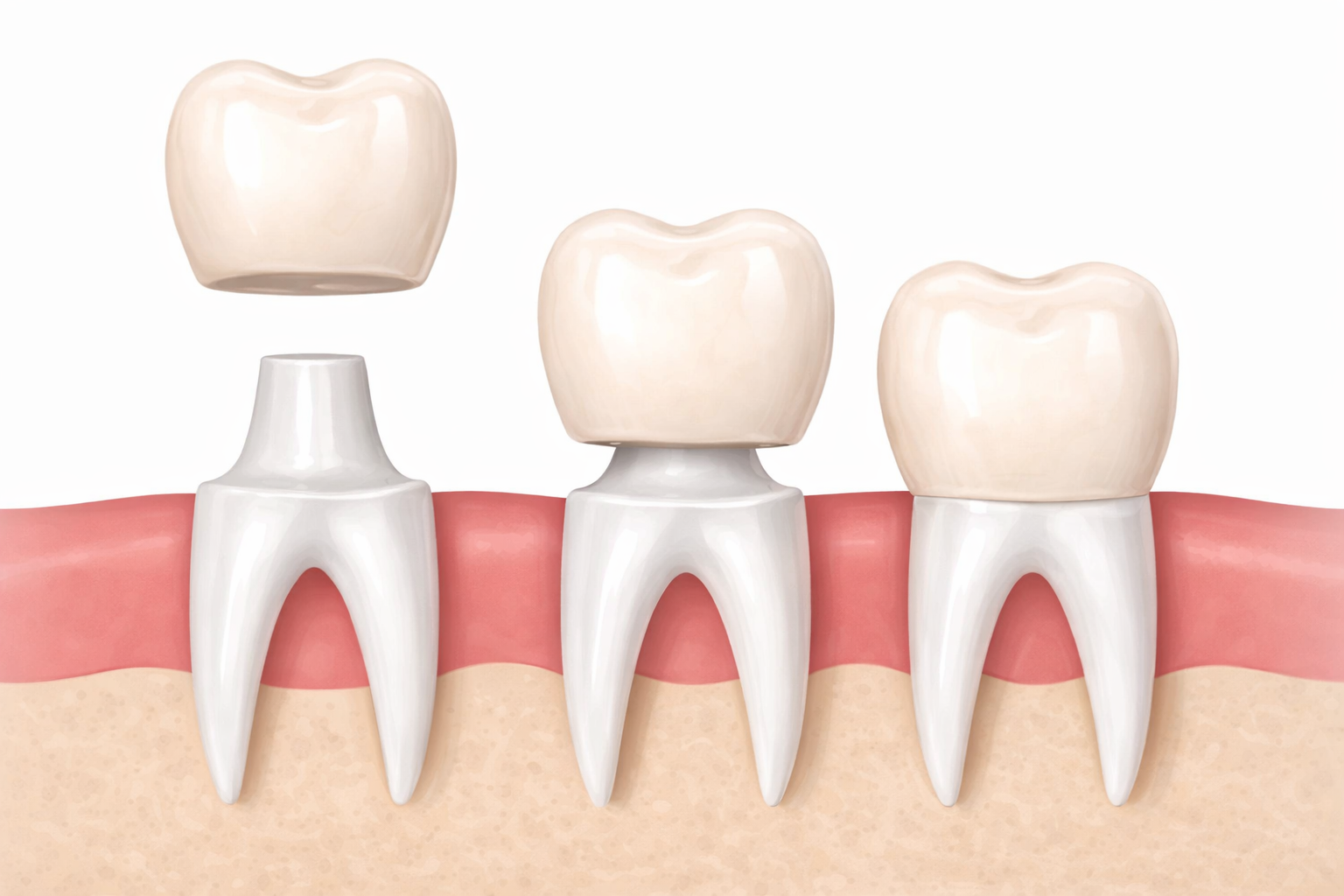
A dental crown is a custom-made cap placed over a damaged or weakened tooth to restore its shape, strength, and function. Instead of repairing just one part of the tooth, a crown covers the entire visible surface, protecting it from further damage while allowing you to chew and bite normally.
Common Reasons Dentists Recommend Crowns
Dentists usually recommend crowns when a tooth is too damaged to be repaired with a simple filling. This often happens when a cavity has grown too large, when a tooth has cracked, or when repeated fillings have weakened the remaining structure.
In some cases, crowns are also placed after root canal treatment, where the inner part of the tooth has been treated and the outer structure needs reinforcement. Without a crown, the tooth may become brittle and more prone to fractures over time.
How Crowns Restore Damaged Teeth
A crown works by redistributing the pressure from chewing across the entire tooth. This is especially important for molars, which handle the most force when you eat. By covering the tooth completely, the crown helps prevent cracks from spreading and protects the remaining natural structure underneath.
The process usually involves reshaping the tooth slightly so the crown can fit securely. Once placed, the crown functions like a natural tooth, allowing you to eat, speak, and smile with confidence.
Types of Dental Crowns Explained (And When Each Is Used)
Not all dental crowns are the same. The material used affects how strong the crown is, how natural it looks, and how long it lasts. Dentists choose the type of crown based on where the tooth is located, how much pressure it handles, and what the patient prioritises; durability, appearance, or cost.
Metal Crowns
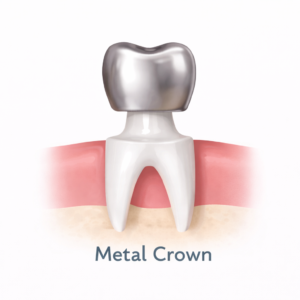 Metal crowns, often made from gold or other alloys, are known for their exceptional strength and durability. They rarely chip or crack, which makes them ideal for molars at the back of the mouth where chewing pressure is highest.
However, their metallic appearance makes them less popular today, especially for visible teeth. While they are one of the more affordable options, most patients prefer tooth-coloured materials for aesthetic reasons.
Porcelain-Fused-to-Metal (PFM) Crowns
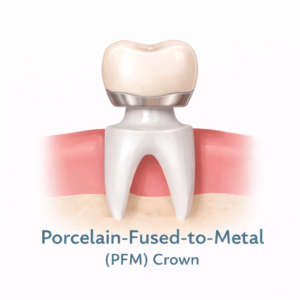 PFM crowns combine a metal base with a porcelain outer layer. This allows them to offer both durability and a more natural appearance compared to full metal crowns.
They are commonly used for both front and back teeth because they provide a good balance between strength and aesthetics. However, over time, the metal underneath may become slightly visible near the gum line, especially if the gums recede.
All-Ceramic or Porcelain Crowns
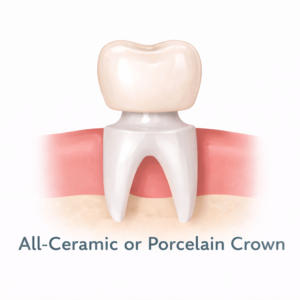 All-ceramic or porcelain crowns are designed to closely match the colour and translucency of natural teeth. This makes them one of the best choices for front teeth, where appearance matters most.
While they offer excellent aesthetics, they are generally not as strong as metal-based or zirconia crowns. For patients who prioritise a natural-looking smile over maximum strength, porcelain crowns are often recommended.
Zirconia Crowns
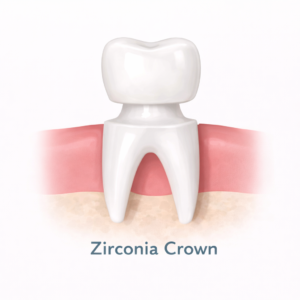 Zirconia crowns have become one of the most popular options in modern dentistry because they combine high strength with a natural appearance. Made from a durable ceramic material, zirconia crowns can withstand heavy chewing forces while still blending well with surrounding teeth.
They are especially suitable for molars and patients who want a long-lasting solution without compromising too much on aesthetics
Temporary Crowns
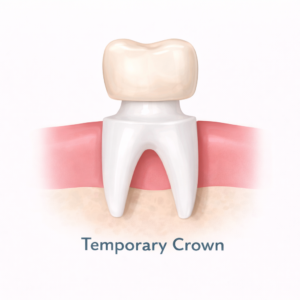 Temporary crowns are used as a short-term solution while waiting for a permanent crown to be fabricated. They are usually made from acrylic or resin and are not designed for long-term use.
How Long Do Different Types of Dental Crowns Last?
The lifespan of a dental crown depends on the material used, how well you care for it, and how much pressure the tooth handles during everyday activities like chewing. While crowns are designed to be long-term restorations, not all materials last the same number of years.
Lifespan by Material
Different dental crown materials have different durability levels.
- Metal crowns are known to last the longest, often exceeding 15 years because they are highly resistant to wear and rarely chip or crack.
- Zirconia crowns are also highly durable and can last 10 to 15 years or more with proper care. Their strength makes them especially suitable for molars, where chewing pressure is highest.
- Porcelain-fused-to-metal crowns generally last around 10 to 15 years as well, although the porcelain layer may wear down or chip over time.
- All-ceramic or porcelain crowns typically last between 8 to 12 years, depending on how much stress they are exposed to.
What Affects Crown Durability
Beyond the material itself, several factors influence how long a crown will last. One of the biggest factors is bite pressure. Teeth at the back of the mouth experience significantly more force during chewing, which is why stronger materials are often recommended in these areas.
Oral habits also play a role. Teeth grinding, clenching, or biting hard objects like ice can shorten the lifespan of a crown, regardless of the material used. The condition of the underlying tooth is equally important. A crown relies on the remaining tooth structure for support, so if the foundation is weak or compromised, the crown may not last as long.
Dental Crown Comparison by Type in Malaysia
While knowing the general price range is helpful, most patients want a clearer comparison between each type of crown. The reality is that you’re not just paying for a material, you’re paying for how that material performs over time in terms of strength, appearance, and longevity.
Type of Dental Crown | Material | Best For | Estimated Price (Malaysia) |
Metal Crown | Gold / metal alloys | Back teeth (molars) | RM800 – RM1,200 |
Porcelain-Fused-to-Metal (PFM) crown | Metal + porcelain coating | Front & back teeth | RM1,000 – RM1,800 |
All-Ceramic / Porcelain Crown | Ceramic / porcelain | Front teeth | RM1,200 – RM2,000 |
Zirconia Crown | Zirconium dioxide | Back teeth / long-term use | RM1,800 – RM2,500 |
Temporary Crown | Acrylic / resin | Short-term protection | Usually included |
Beyond material, the cost of a dental crown can also depend on the clinic and laboratory involved. Some clinics use local dental labs, while others may work with specialised labs that provide higher precision and aesthetics.
Technology also plays a role. Clinics that use digital scanning instead of traditional moulds may offer more accurate fittings, which can improve comfort and longevity. However, this can also contribute to a slightly higher price.